The Boy at the Chalkboard
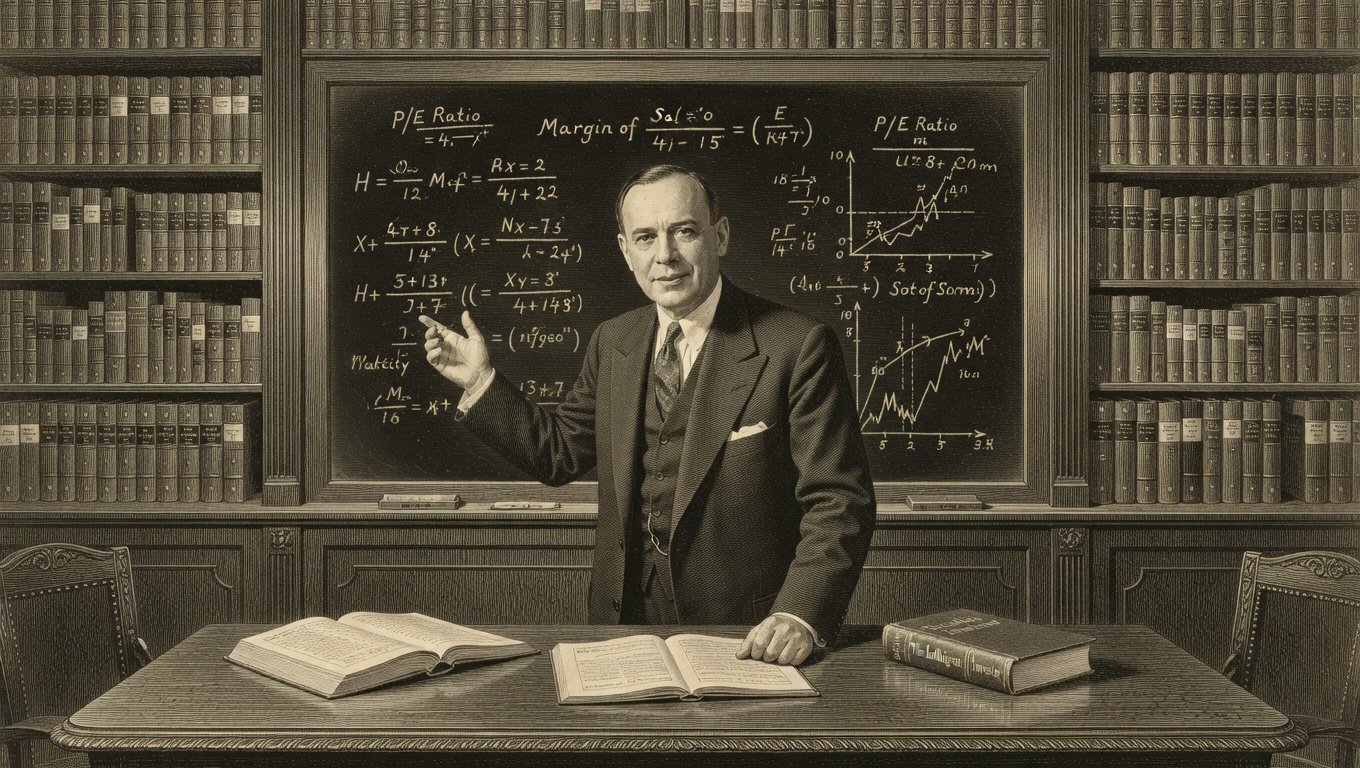
Paine Webber, Boston, 1891. Fourteen years old, fresh off a Massachusetts farm with three dollars and twelve cents in his pocket. Livermore’s first job was chalking quotes on a blackboard for customers in the brokerage — the tape came in, a boy wrote the prints up on the wall, the customers watched the numbers change. Five dollars a week. He had farm hands that weren’t used to chalk and a memory that apparently photographed everything that crossed the wire.
Within a few weeks he started keeping a small notebook. He wrote down prices and what he thought the stock would do next, then checked himself against what happened. Nobody told him to do this. He did it because the patterns bothered him — stocks that sat quiet for days and then jumped, stocks that drifted sideways on fading volume and then broke down. A coworker saw the notebook and suggested he put a bet down somewhere. At fifteen he pooled his $3.12 with another boy’s stake and walked into a bucket shop.
Bucket shops, for anyone who doesn’t know the term: storefront operations, semi-legal at best, where a customer bet on the direction of a stock without anyone actually buying the stock. The shop took the other side. You put down ten dollars on Union Pacific, it ticked against you by a point, the shop kept your ten dollars and you went home. A boy who could read the tape had an edge in that environment because the shop was laying off nothing — it was a bookmaker without a line-maker. Livermore won consistently enough that by eighteen no shop in Boston would take his action. They called him the Boy Plunger and barred him at the door.
Quick note on what this means. He was not a genius picking stocks. He was a kid who memorized how the tape moved during the first ten minutes after a print broke out, and who had the nerve to size up when he saw the setup again. Those are two different skills and most people only ever acquire one. He had both by the time he could vote.
New York, 1899: Broke in Six Months
He took his winnings and moved to Manhattan at twenty-one with roughly $2,500 in his pocket. He was broke inside half a year.
The reason is worth dwelling on because it’s the reason ninety percent of decent retail traders fail when they move to bigger size. In a bucket shop the price you saw was the price you got. On a real exchange in 1899 you handed a ticket to a runner, the runner took it to the floor, the specialist filled it at whatever the book had, and by the time you got confirmation the market had moved half a point. You paid for your own size. If you were any good, the market paid attention to you, and the better you were the worse your fills got. Livermore didn’t understand this at first. He thought he was the same trader he was in Boston. He wasn’t.
It took him about six years to figure out that bucket-shop trading and exchange trading were — I’ll borrow a horse-track phrase a fellow named Frank O’Donnell used to say at Aqueduct back in the eighties — different meetings with different rules. Frank ran a small book on the backstretch at Aqueduct and he used to tell me: the two-year-olds at Saratoga in August are not the same animals as the two-year-olds at Aqueduct in November. Same breed, same names on the card, but the meeting is different. Livermore figured out that Wall Street was Aqueduct in November and Boston had been Saratoga in August. He started sizing accordingly. He started accepting slippage as a cost. He started waiting for setups that gave him enough room that the slippage didn’t matter.
He went broke several more times in the process. Borrowed money, rebuilt, blew up, borrowed again. The lessons that came out of those years were the ones he later put in his book, and they’re the ones every trader keeps rediscovering:
- The market is indifferent to your opinion. What you think is going to happen is irrelevant. The prints are what happens.
- Timing beats analysis. Right direction, wrong month, and you get stopped out before the move begins. I lost a lot of money on this lesson personally in 1991, holding International Paper through a quarter I shouldn’t have held it. That one stung.
- Never average down. If the stock is going against you, your read was wrong. Adding more shares doesn’t make your read correct — it makes you more wrong, with more money.
By 1906 he’d put it all together. He was thirty years old, and he was about to have his year.
1907: The Panic, Morgan, and the First Real Fortune
The spring of 1907 was hot in New York, tight money across the country, and the Heinze-Morse copper crowd was already in trouble by summer. Livermore saw what was coming. He didn’t see it the way historians see it now — he saw it the way a tape reader sees it, in the prints, in the volume, in the way leading stocks were failing to make new highs while the averages were still grinding up. He started building a short book. Carefully. Gradually. Adding as the tape confirmed him, sitting out when it didn’t.
October of that year was the payoff. The Knickerbocker Trust run, the cascading bank failures, the cash crisis on the Street. Livermore made a reported three million dollars in a single day. By the time Morgan rolled in with the scratch lunch at 23 Wall Street and jawboned the bankers into propping the system up, Livermore’s total take was somewhere north of five million — call it $150 million in today’s money, give or take.
The Morgan story is worth telling because it’s the one nobody tells right. Morgan sent word through an intermediary asking Livermore to stop pressing the short side. Livermore agreed. The conventional read is that he did it because Morgan asked. The real read — and this is what he wrote himself later — is that he’d already decided the low was close enough that pressing further was a bad risk-reward trade. Morgan asking him to cover was convenient cover for a decision he was already making. That’s how good traders work. They don’t take moral positions. They take price positions.
He covered the shorts, went long into the wreckage, and made money on the recovery too.
1908 to 1928: Four Fortunes, Three Bankruptcies
The twenty years between 1907 and 1929 are the part of the Livermore story that nobody wants to tell because they complicate the legend. He made and lost multiple fortunes in that span. In 1908 he got taken for most of his 1907 money on a cotton position he held on the advice of a fellow named Percy Thomas — violated his own rule about never trading tips, held the position way past his stop, lost most of the stake. By 1915 he was bankrupt. By 1917 he was back up through war stocks. By the early twenties he was wealthy again, losing it, making it back.
The pattern was the same every single time. When he traded his own system he was the best in the world. When he traded someone else’s idea, or held past his stop because his pride couldn’t eat the loss, or sized up on a position that wasn’t confirming, he got hurt. He knew this. He wrote about it. He still did it.
I watched a fellow named Addy Cartwright do the same thing on Salomon’s block desk in 1989. Best read on IBM at size of anyone I worked with. Lost most of a year’s bonus on a Pennzoil position he held three weeks past where he should have cut it, because a research guy he liked kept feeding him reasons to stay. Addy was sharp. Addy knew better. It didn’t matter. Pride and familiar voices will kill a good trader faster than bad analysis ever will.
1929: The Short of the Century
By 1928 Livermore was watching the public. He had been through 1907. He knew what a top looked like — not in the averages, but in the behavior. Shoeshine boys giving tips. Divorcees buying radio stock on margin. Leadership narrowing. Secondary stocks already rolling over while the Dow kept making new highs. He started his short book in the spring of 1929. Small at first. Adding on confirmation. Pyramiding the short exactly the same way he’d taught himself to pyramid longs.
When Black Thursday hit on October 24 he was positioned heavy. Black Monday and Black Tuesday on the 28th and 29th blew the market out. Livermore’s profits that week were reported at roughly a hundred million dollars. In 1929 money. That’s close to a billion and a half today, and it was a single week’s work, and it was done while several million Americans were being wiped out at the same moment by the same move.
He owned a townhouse on East 76th, a yacht called the Athero II, a private railcar, apartments in Chicago and Palm Beach, a fleet of cars and a staff to run them. He was, for about eighteen months, one of the most famous men in America.
Nina threw parties on the yacht that ran till four in the morning.
What He Actually Believed About Trading
Livermore put his methods down in How to Trade in Stocks in 1940, which is the book you have to read alongside the Lefèvre novel from 1923. The Lefèvre book is the one everyone quotes because it reads like a novel and the sentences are better. The 1940 book reads like a worn-out man writing in a hurry, which is what it was, and it tells you things the Lefèvre book doesn’t. Both are essential. Here’s what he actually believed, stripped of the mythology.
Trade with the trend, not against it
He believed the big money was in riding a major move, not in picking tops and bottoms. A stock in an uptrend will continue in that uptrend until something breaks it, and the trader’s job is to be long and to stay long until the tape says otherwise. Countertrend trading — fighting the move — was in his view the quickest way to die. Bernard Baruch, who I consider in some ways a more clear-eyed operator than Livermore, said something similar: nobody gets out at the top and nobody gets in at the bottom, and if anyone tells you they do they’re lying. Baruch made his money in the middle of the move. So did Jesse.
Cut losses quickly. Let winners run.
This is the one everybody knows and nobody does. The natural human move is the opposite: lock in the small gain because it feels good, hold the losing position because closing it makes the loss real. Livermore understood that the arithmetic of trading is brutal and one-sided — if your average loss is bigger than your average win you will go broke no matter how often you’re right. The only way to have a favorable ratio is to cut losers early and sit on winners past where your gut wants to ring the register.
Wait for the pivotal point
He never bought at the bottom. He waited for what he called the pivotal point — the moment the tape told him the move was underway. He paid up for confirmation. Modern traders rediscover this every ten years and give it a new name. O’Neil called it the pivot. The breakout traders of the seventies called it the box top. Darvas called it something else again. It’s the same idea in different suits.
Pyramid winners, never losers
When the position moved in his favor he added. When it moved against him he cut. The market was either confirming his thesis or contradicting it, and his position size tracked that feedback. This is the opposite of what retail traders do, which is why retail traders lose.
Trade the leaders
He didn’t buy laggards because they looked cheap. Cheap stocks were cheap because nothing was happening in them. He traded the strongest stocks in the strongest groups, and he got out when leadership rotated.
The Collapse
He was broke again by 1934. Fourth bankruptcy. More than two million in debts he couldn’t pay. Nobody really knows the full sequence because he wouldn’t talk about it in detail and his sons disagreed later about the chronology, but the outlines are clear enough. He sized up too aggressively in markets that weren’t giving him the clean trends he needed. He traded commodities during a period of government intervention that scrambled the signals he relied on. His second marriage was falling apart. His first wife was already gone. Alcohol was part of it, though how much is debated.
He tried to come back through the late thirties. Wrote the 1940 book partly for the money, partly because he believed the method was still sound even if he couldn’t execute it anymore. The book didn’t sell. On the Thursday after Thanksgiving 1940 he walked into the Sherry-Netherland.
I don’t know what to do with the note. My life has been a failure is a man in a clinical depression talking to his wife. It’s not a reviewer’s assessment of his trading record. The trading record is: he made four fortunes in a country where most people never make one, he called two generational tops years in advance, he codified a method that every momentum trader since has stolen from, and he did it all before radar existed. The failure he’s talking about in that note isn’t the tape. It’s the life. Those are different things.
What You Actually Learn From Him
The lesson most people take from Livermore is “cut your losses.” That’s true but it’s small. The real lesson, the one that’s harder to swallow, is that being right about markets is not enough. He was right about markets at a level almost nobody has matched. It didn’t save him. His knowledge of tape action would have made a modern hedge fund analyst look like a summer intern. And he still ended up face-down in a Manhattan hotel lounge with eight pages of scribble in his pocket.
What you learn from him, if you’re paying attention, is that the market discipline is the smaller discipline. The larger discipline is the one you practice on yourself when nobody is watching and there’s no tape running. Livermore had the first one and lost the second one. You read him to learn the first. You read his biography to be warned about the second.
The books to read, if you’re going to read only two on this man: Reminiscences of a Stock Operator by Edwin Lefèvre, 1923, and How to Trade in Stocks by Livermore himself, 1940. Both belong on your shelf. If you read only one, read the Lefèvre. It’s the better piece of writing and you’ll come back to it.
See also: Benjamin Graham, Warren Buffett, George Soros, Peter Lynch — different men, different methods, all worth the time. And the companion pieces on this site, which bear on why Livermore ended the way he did: risk management, trading psychology, Crash of 1929, Richard Dennis.
That was the last time I’ll write about him for a while. Not going to pretty it up.