Why 1987 Still Matters
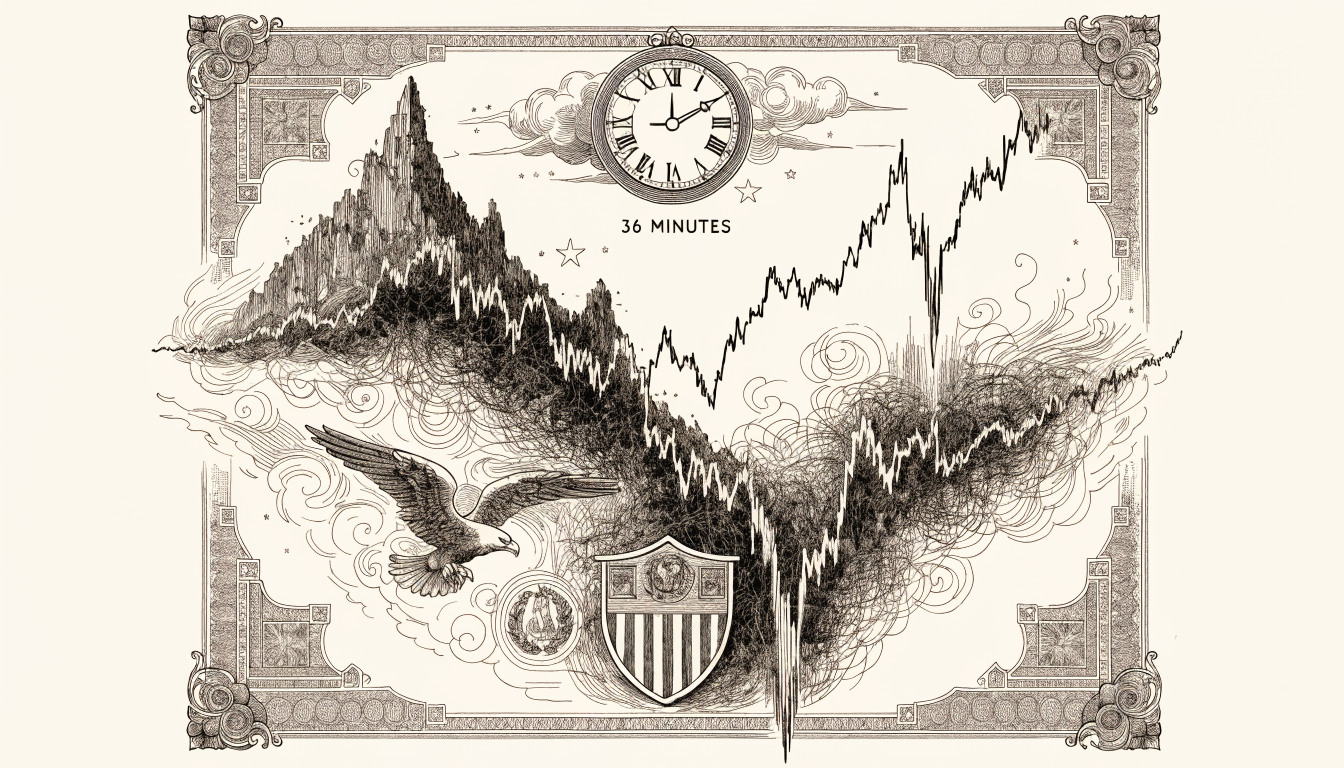
The shape repeats. 1998 with LTCM. 2000 with the dot-com unwind. 2008 with subprime. The 2010 Flash Crash. COVID in March of 2020. Different decades, different pretexts, different participants — the underlying choreography was already legible on a Quotron screen in lower Manhattan on a Monday in October of 1987. If a man wants to understand how a market panic actually moves through the wiring, he starts with this day. Not with the academic accounts written ten years later. With the tape.
The Setup: Summer and Fall of 1987
The crash didn’t come from nowhere. The conditions had been stacking up for months, the way a stud poker table tightens before somebody finally shoves all in on a middling hand. There was a fellow I used to play with on Thursday nights at a back room near Beaver Street, a Cuban man named Tito who ran a printing shop up on 34th and had more patience than any trader I ever worked alongside. Tito’s rule was: the dangerous moment isn’t when you’re losing — it’s when everyone at the table is ahead. Nobody wants to cash out, nobody believes they can lose, the chips sit loose under the lamp. He used to say it the same way each time, in that flat un-emphatic voice of his, and the table generally lost a bundle inside the next hour. That was the equity market in August of 1987.
The Dow had run from 1,900 in late 1986 to 2,722 by the August high — 43% in under a year. P/E ratios on the S&P 500 had pushed up to 23, well past the long-run average of 15 to 17. The Federal Reserve had been tightening through the year. The 10-year Treasury yield, which had begun January around 7%, was over 10% by early October. Bonds were getting attractive again in a way they hadn’t been for several years, and the cost of carrying leveraged stock positions was climbing at the same time. Treasury Secretary James Baker made comments that fall the boys on the desk read as the dollar being allowed to slide further, and international holders of US paper started deciding they’d rather be somewhere else. On top of all of it, the Iran-Iraq war was grinding on, and on Friday October 16 the US Navy hit Iranian oil platforms in the Gulf.
Any one of those factors, by itself, was survivable. A market shrugs off a rate tick or a Gulf skirmish on a normal Tuesday. What it can’t shrug off is all of them, at once, in a market priced for permanent good weather. By the Friday close before Black Monday, the tape was already telling you something was wrong. The question wasn’t whether. The question was how much.
The Trigger: The Week Before
People forget that the week leading into Black Monday was already ugly. When the history books say “the crash,” they mean Monday, but the setup for Monday was three of the worst consecutive sessions anyone on the desk could remember.
| Date | Dow Jones Change | Cumulative from Peak |
|---|---|---|
| Wed, Oct 14 | −95 points (−3.8%) | −7.2% |
| Thu, Oct 15 | −58 points (−2.4%) | −9.5% |
| Fri, Oct 16 | −108 points (−4.6%) | −13.7% |
| Mon, Oct 19 | −508 points (−22.6%) | −33.2% |
By the Friday close the Dow was already down nearly 14% from its August high. Over that weekend, Asian markets opened first on Sunday night our time, and they didn’t just sell — they broke. Tokyo. Hong Kong. Sydney. Europe followed in the morning. When the New York Stock Exchange bell rang at 9:30 on Monday, the order imbalance at the open was something none of us had ever seen. Specialists on the floor couldn’t open trading in some of the major names because there were no bids at any price. Actual shutouts. Stocks marked “delayed opening” on the board for forty minutes, an hour, longer. I remember a fellow named Frank Esposito on the post nearest mine looking at his book and saying “there’s nobody on the other side, there’s nobody.” He said it twice, and Frank wasn’t a man who repeated himself.
What Happened on Black Monday
What I remember is in pieces, not in a clean narrative. The tape went into late. By eleven it was running forty minutes behind. The phones on the desk wouldn’t ring out — I mean physically wouldn’t complete the call, because there were too many people in lower Manhattan trying to use too few lines. The kid from the deli on Broad Street tried to deliver sandwiches around eleven-thirty and gave up; he couldn’t get through the building. My shirt was soaked through at the collar by noon and it wasn’t a hot day. The boss had said the Friday before, looking at the close, “if this keeps up next week, bring a toothbrush.” He wasn’t joking.
The Dow dropped 200 points in the first hour. Market makers on the over-the-counter side in a lot of smaller names simply stopped answering their phones. Not metaphorically. They hung up, or they let it ring. Nothing in the rulebook says you have to make a market when the world is ending, and that day they didn’t. By midday the portfolio-insurance machines were carpet-bombing the futures pit in Chicago, and the cash market here was chasing the futures price lower in a loop that fed itself. Around two in the afternoon word went through the desk that the NYSE was debating closing entirely. They didn’t. The rumor did its own damage anyway. At the close the Dow stood at 1,738.74, down 508.32. Volume: 604 million shares. The previous record had been 338 million. Nearly doubled in one day.
I lost money that afternoon. Not a fortune — the desk had size limits I couldn’t override — but enough that I remember the dollar figure thirty-eight years later and I’m not going to print it. Everyone at Salomon lost money. The men who didn’t were either short going in, which was three guys on the whole floor I know of by name, or they were flat and got lucky. Anyone who tells you he was “positioned for it” is one of those three or is fabricating it after the fact. The tape doesn’t care about your thesis. Tape doesn’t care.
The Role of Portfolio Insurance
Portfolio insurance was the accelerant. Not the match — the gasoline somebody had already poured on the floor. It was a product of the early 1980s academic finance crowd. The idea was that you could use computer models to dynamically hedge a stock portfolio by selling S&P 500 futures as the market declined, and that way you’d have downside protection without sacrificing upside. On paper, elegant. In practice, a doom loop waiting for a trigger.
The loop worked like this. The market falls. The insurance programs automatically sell futures to hedge. The futures get pushed below fair value versus the cash stocks. Arbitrageurs, doing what arbitrageurs are paid to do, sell the stocks and buy the cheap futures to capture the spread. The stock selling drives the cash market lower. The lower cash market triggers another round of insurance-driven futures selling. And around you go.
The estimates on how much money was running this strategy on October 19 vary. The consensus range is $60 to $90 billion — serious money in 1987 dollars. When all of it kicks in at the same time, the market isn’t being hedged any more — it’s being sold by machines with nobody on the other side. The Brady Commission report later estimated portfolio insurance amplified the decline by something on the order of 10 to 15 percentage points. Meaning: without it, the day is still ugly, perhaps an 8% or 10% drop. With it, you get the 22.6%.
There is a permanent lesson in that, and it has nothing to do with 1987 specifically. When everyone at the table is using the same insurance policy, the insurance policy becomes the fire. A strategy that works in isolation can fail catastrophically when it goes universal. Tito would have read the table dynamic in about ten seconds, and he didn’t even know what an S&P future was.
The Aftermath
What almost nobody outside the room understands is how close the financial plumbing came to actually seizing. The Dow number was the headline. The real story was what happened Tuesday morning, before the market opened.
Alan Greenspan had been Fed Chairman for exactly two months. At 8:41 AM on October 20, before the bell, the Fed released a one-sentence statement: “The Federal Reserve, consistent with its responsibilities as the Nation’s central bank, affirmed today its readiness to serve as a source of liquidity to support the economic and financial system.” Plain English: we will lend to anyone who asks. That sentence is the single most important thing any central banker has said in my adult life. It is widely credited with preventing a genuine collapse, and the credit is warranted.
The reason it mattered: credit markets were already freezing Monday night. Banks were pulling lines from brokerages that had taken losses. Several major firms — names I won’t print because some of them still exist in modified form — came within hours of failing because they couldn’t meet margin calls out of their own capital. The Fed worked the phones behind the scenes that night and through Tuesday morning, and told the banks, in language I’d describe as less than optional, to keep lending. They kept lending.
Then came the strange part. After two more chaotic sessions, the market stabilized. By December the Dow had recovered roughly half its loss. By August 1989 — less than two years after the crash — it had reclaimed its pre-crash high of 2,722. The entire crash was erased inside twenty-two months. That recovery is the single most underappreciated fact about Black Monday, and it’s the one most retellings skip.
What Changed After 1987
The plumbing got rebuilt. Several pieces of it, at varying speeds.
Circuit breakers. The NYSE put in mandatory trading halts that trigger when the broad market drops by set percentages — now 7%, 13%, and 20% off the prior close. The idea is to freeze the game for a few minutes, let people breathe, let the imbalance clear, prevent the runaway feedback loop from compounding for six straight hours the way it did in 1987. They have been triggered only a handful of times since they were installed, and on those days they appear to have done what they were meant to do.
The President’s Working Group on Financial Markets got formalized in March 1988. The boys in the press called it the Plunge Protection Team, which was catchier than the real name. Coordination among Fed, Treasury, SEC, and CFTC during a crisis. Before 1987 that coordination existed on an ad hoc basis, dependent on whoever happened to know whom. After 1987 it sat on a piece of paper.
Portfolio insurance died. Not regulated out of existence — just abandoned by the people who had sold it, because the phones at their clients stopped ringing for them. The strategy got replaced by options-based hedging — buying actual put options — which has a defined upfront premium cost and doesn’t generate the same reflexive cascade. The product that had been marketed as reducing risk turned out to be the largest single source of risk in the entire market on the worst day. That happens often in finance, and any young trader should watch for the pattern. Things sold as protection sometimes are the danger.
The Fed’s role expanded, permanently. Greenspan’s Tuesday-morning statement established a precedent that the Fed would show up for markets in distress. The precedent acquired names — the Greenspan put, then the Bernanke put — and it shaped how every trader born after 1987 thinks about downside. Whether that’s healthy for the long-run risk appetite of the system is a separate argument, and my feelings on it have moved around over thirty years. The day itself I had no doubt it was the right call. By the late 1990s I had some doubts. By 2008 the doubts were larger. I don’t think there’s a clean answer.
Lessons for Traders
Markets fall faster than a man believes possible. 22.6% in a single session was inconceivable on Friday afternoon and was fact by Monday’s close. If your position sizing and your stops are calibrated to normal volatility, you are unprotected against the tail. Build for the tail. The cost of that protection in normal weather is the price of staying solvent on the day the weather changes.
Leverage will finish you. Margin traders got obliterated on Black Monday — not just because they lost money, plenty of cash traders lost money too, but because they received margin calls they couldn’t meet, and their positions were liquidated into the worst prints of the worst day. Cash is the ultimate hedge against a dislocation nobody saw coming. There is no clever substitute for it. People keep trying to invent one.
Crashes are buying opportunities only in retrospect. Anyone who bought on the open of October 20 earned extraordinary returns. But buying on that morning required three things at once: cash on the sidelines, the conviction the system would hold, and the physical nerve to send the order when every phone in the office was ringing with a margin call. Most men lacked at least one of those. I lacked at least one. Not going to pretty it up.
Nobody rings a bell at the top. In hindsight the warning signs were all flashing — the valuation, the rate moves, the dollar comments, the speed of the run from 1,900 to 2,722. The signs were there. The trouble with signs is that they are always there, and they usually mean nothing for years at a stretch, until the one time they mean everything and you can’t get a phone line out of the building.
The system is more resilient than the headlines suggest. No recession. No banking crisis. Full recovery inside two years. Markets break and markets heal, often faster than the pessimists predicted and at a different cadence than the optimists expected. That fifth point is the underappreciated one and I trust it less than the first four, because the next time may not rhyme. Plumbing failed. Plumbing got patched. Whether the patch holds is a question every cycle re-asks.
Black Monday by the Numbers
| Metric | Value |
|---|---|
| Dow Jones decline | 508.32 points (−22.61%) |
| S&P 500 decline | −20.47% |
| NYSE volume | 604 million shares (previous record: 338 million) |
| Global wealth destroyed | ~$1.7 trillion |
| Time to recover to pre-crash high | ~2 years (August 1989) |
| Fed response time | ~15 hours (statement before next day’s open) |
| Recession following crash | None (economy continued expanding) |
The absence of a recession is what makes 1987 unusual in the lineup of big crashes. The 1929 crash ushered in the Great Depression. The 2000 crash was followed by a mild recession and a long unwind of the NASDAQ. The 2008 crash sat inside the worst economic contraction the country had seen since the 1930s. Black Monday, by contrast, was a self-contained market event. The plumbing failed, the plumbing got patched, and the real economy kept expanding on both sides of the date as if nothing unusual had happened. That distinction matters more than people give it credit for. Not every crash is a signal of economic sickness. Some crashes are the market arguing with itself, and those recoveries are fast.
The 20th Anniversary: October 2007
There is a footnote almost nobody noted at the time. The 20th anniversary of Black Monday fell on October 19, 2007. The S&P 500 had hit its all-time high of 1,565 on October 9, ten days before. Less than eighteen months later the index would trade at 676 — a 57% drawdown, larger in total damage than 1987, slower in delivery, and far more destructive to the underlying economy. The lesson rhymed without repeating verbatim. Markets that feel invincible are markets at their most fragile. 1987 taught it in a single afternoon. 2008 taught it again over eighteen months of slower torture. Same lesson, different meetings.
I drove past the old Salomon building on a Wednesday in early 2008, on the way back from squash at the NYAC, and I remember thinking the lobby looked the same and nothing else did. The men I had worked alongside in 1987 were mostly out of the business by then. The phones on those desks ring differently now, into different ears, attached to different boxes. The day still teaches what it taught. The men keep changing.
See also: The Stock Market Crash of 1929 · The 2008 Financial Crisis · The Dot-Com Bubble · What Is a Bear Market? · Trading Psychology: Fear and Greed